Toothpaste Back in Tubes: On opportunity cost, art, and what stays human
Two environmental artists. Three months. Five hand-built buildings for an indie game’s city district.
Every facade custom. Every texture intentional. Three months of craft for five structures players will sprint past in eight seconds on their way to the next quest marker.
Or: a generation pipeline produces fifty convincing models in an hour. Variation, weathering, architectural detail. Good enough that players don’t notice. And now those two artists have three months for the work that actually makes a game memorable.
The anti-AI argument says the first option is better. The hand-built buildings matter. Something is lost when a machine generates the set dressing.
That argument leaves the other side of the ledger empty. What you could build with the freed time. What doesn’t get made when every hour goes into stuff players sprint past.
Opportunity cost is the missing variable in most AI criticism. People fixate on what AI takes away without weighing what it unlocks. Outcomes decide these questions. Purity is a proxy the debate keeps mistaking for the real thing.
What the critics are actually worried about
The honest version of the anti-AI position has weight. It deserves a proper statement before anyone argues with it.
There is a real worry about deskilling. A generation that never has to struggle through a blank page, a first draft, a hand-traced figure loses something that the struggle itself used to produce. The craft becomes harder to recover once the entry path is paved over.
There is a real worry about concentration. Cognitive work gets routed through a handful of frontier labs. Whatever they choose to optimize becomes the default texture of everyone else’s thinking. The political economy of that is ugly.
There is a real worry about identity. People whose meaning is built on the doing of a thing (the writing, the drawing, the coding) watch the thing get cheaper. What you built your life around stays where it is. Its economic and cultural weight changes. That grief is legitimate.
None of this is crank-level resistance. People making these arguments are right that something hard is happening. The counter is that the cost of refusing AI is usually higher than they admit, and that the benefits flow to places they tend not to look.
Art and function are not the same thing
The debate keeps conflating two kinds of work, and the confusion does most of the damage.
A designer builds a brand identity from scratch. The color palette, typography, the system that makes everything feel like it belongs together. Expression. That same designer produces forty banner ad variations for a Q3 campaign. Same skills, same tools, same eye. One is the work she stays up thinking about. The other is Tuesday.
Both require craft. Both take taste. They are still different work.
The game-dev case makes this concrete. Those fifty AI-generated buildings populate the world. The art sits in everything the freed-up artists now have time to do. Defining a visual identity distinctive enough to recognize the game from a single screenshot. Building environmental narratives that reward players who pay attention. Height marks on a doorframe. A desk covered in crumpled letters. The moment you round a corner and forget you are holding a controller.
AI can populate a city block. It cannot decide what that city block should make you feel.
Programming follows the same pattern. The product was always the point. Code was the road to it. Most code is plumbing. Routing, validation, CRUD, config files. Nobody writes love letters about plumbing.
When people mourn that “AI is taking away the craft of coding,” they are romanticizing the function and calling it art. Some code genuinely is artful. Elegant algorithms, clever architectures, systems that solve hard problems in surprising ways. That is a small fraction of what most developers write on any given Tuesday.
The real question is whether AI frees people to do more of the work that requires taste, judgment, and creative risk. The work that makes someone stop what they are doing and take a screenshot. If the answer is yes, creative labor comes out ahead, even if the shape of the job changes.
The purity test is a luxury
Hand-crafted everything sounds noble in the abstract. In practice, it is a position you can only afford from a place of privilege.
A solo founder builds a product that would have required ten people two years ago. A nonprofit that cannot afford a designer produces a grant proposal with professional visuals. A teacher who needs thirty differentiated lesson plans for thirty different reading levels generates them in forty-five minutes and spends the rest of the week on the part that actually matters. The kid in the third row who stopped raising her hand two weeks ago.
These are the majority of people who make things for a living. Most creative and knowledge work happens outside well-funded studios. It happens in under-resourced teams, tight timelines, impossible constraints.
For those people, AI gives them tools that match their ambition for the first time.
The opposite position, that everything worth making must be made by hand, has always been a position of surplus. It assumes you have the budget. It assumes you have the team. It assumes the thing you are making is worth three months you do not have.
The honest version of the pro-AI argument has to hold a real caveat. Previous tool shifts grew the pie. AI automates the general-purpose cognitive work that previous tools pushed humans toward. Whether the escape hatch holds this time is a live open question. Anyone claiming otherwise has not been paying attention.
The interesting questions have moved past adoption. What to adopt for. At what scale. With what kind of human taste holding the wheel. Thoughtful adoption and thoughtful resistance disagree about a lot. They agree the debate is not about purity.
Where the hard work lives
Accepting this shifts where the hard work lives.
Tearing down the old objections is the easy part. The hard part is knowing which work should stay human. The judgment to tell the difference between AI output that is good enough and AI output that is confidently wrong. The instinct that comes from having done the work yourself, by hand, enough times to know what good looks like without being told.
That instinct is purchased with reps. Hours of the thing. A generation of professionals who can produce anything but have never struggled to produce anything is a generation that can evaluate nothing.
Evaluation is what stays human.
The other half of the discipline is direction. The two artists take their three months back, and the question becomes what they do with it. Crank out 800 more buildings? More of what the machine just did for them, faster and bigger and no more interesting? The opportunity paid for, then spent on the same work it was supposed to free them from. The point of the trade is the work the machine cannot do. Hero moments. Environmental narratives. The signature piece no one has drawn yet. Freed time that flows back into the work it replaced is time spent twice on the same thing.
The bumper-sticker version of AI advocacy (“just use it”) misses this. So does the bumper-sticker version of AI resistance (“do not use it”). The live axis runs somewhere else. What you pay attention to, which parts you still do by hand, which parts of the freed time go to the work only humans can do, and how seriously you treat the gap between confident output and correct output.
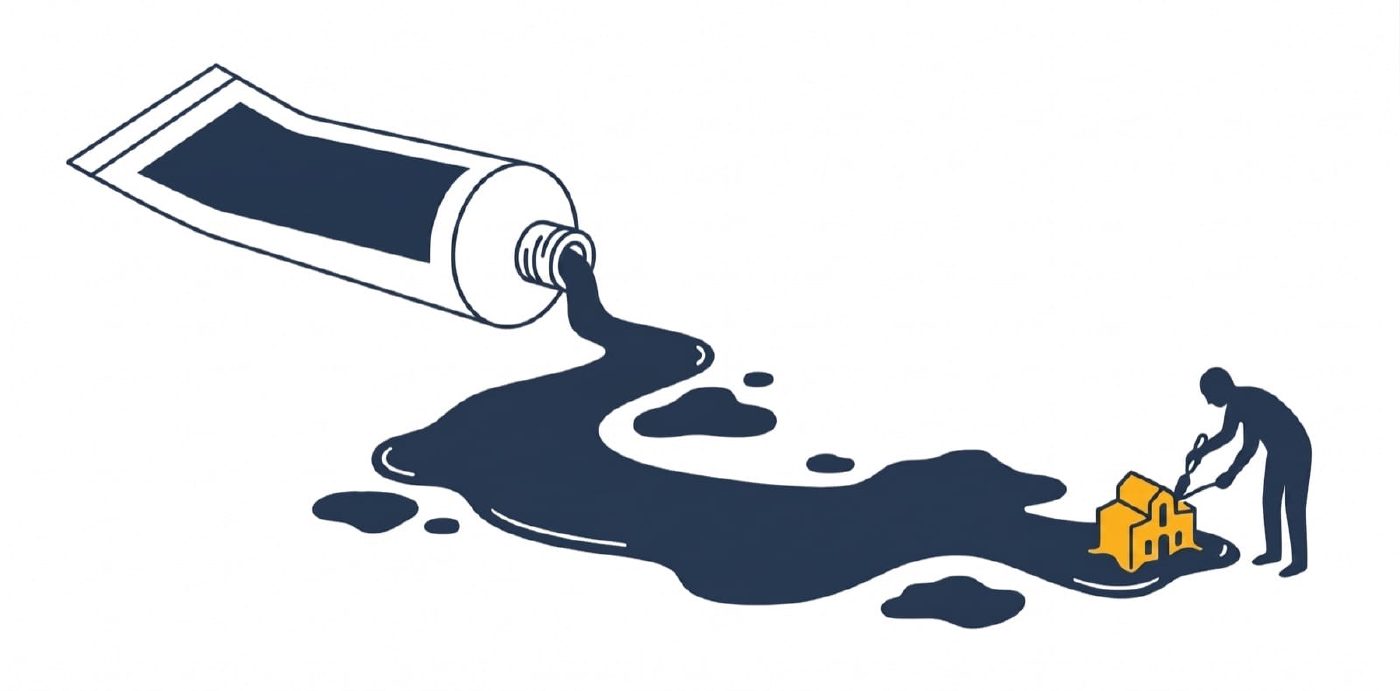
The toothpaste is out of the tube. We just bought ourselves the largest expansion of human attention since electricity. Go cure cancer. Solve fusion. Build the thing no one could afford to build. That is what the trade was for.
Comments